
Louis Vuitton Authenticity Checklist: Date Code, Hardware, Stitching
Quick answer
For a Louis Vuitton authenticity checklist in Egypt, verify the era first: date code for 1980-2021 pieces, NFC chip for newer bags, then heat stamp, canvas alignment, stitching, hardware engraving and lining. Sold Attire sources Louis Vuitton through Japan and rechecks each bag in Cairo before it reaches the LV edit.
For pieces available now, browse authenticated Louis Vuitton bags in Egypt. Use the Sold Archive for era, condition and price context. If the exact Speedy, Alma, Neverfull, Keepall or Pochette is gone, source a similar Louis Vuitton piece through Japan and Cairo authentication.
By Yahya Karali. Founder & Lead Authenticator, Sold Attire · Updated May 2026 · 32 min read
The Vachetta starts pale. What it becomes is entirely up to you.
A Louis Vuitton bag is one of the most counterfeited objects on earth. Somewhere in the region of eighty percent of pieces presented as authentic in secondary markets are not. This is not conjecture. It is what the date codes, the stitching, and the leather tell us, every time, when you know how to read them.
Most buyers approach authentication as a feeling. They want the piece to feel right, to look right, to come with a story or a receipt. These things are useful. They are not sufficient. The fakes have improved considerably, across factories in Guangzhou, Istanbul, and Bangkok, the level of detail now extends to heat stamps, date codes, and even packaging. What they cannot replicate with any precision is the internal system, the logic of how Louis Vuitton has built its pieces since 1854. That logic is what this guide is built on.
What follows is the most complete Louis Vuitton authentication reference we have published. It covers date codes across every era, the full factory atlas, each canvas type, model-by-model verification points, a database of known fake patterns, and current global market pricing. Whether you are buying your first pre-owned Louis Vuitton in Cairo, authenticating a piece in London, or researching resale value in New York, this is the resource.
In this guide
- Why vintage Louis Vuitton holds its value on the resale market
- What changed with authentication after 2021
- How to read a Louis Vuitton date code (1980-2021)
- The complete factory code atlas
- Fake code database, the patterns counterfeits use
- Canvas type authentication guide
- Model-by-model authentication: where to look, what to check
- How to check the heat stamp
- The five-stitch rule
- Vachetta leather, what it is and how it proves authenticity
- Hardware authentication
- Authentication at a glance
- Pre-owned Neverfull, Speedy, Alma, Keepall in Egypt, current availability
- What authenticated Louis Vuitton costs, global pricing guide
- Frequently asked questions
Louis Vuitton date code checker
Check an LV date code before the next authentication step.
Enter the code stamped inside the piece and Sold Attire will decode the likely production period and factory country. A coherent date code is useful evidence, but it is not proof that a Louis Vuitton item is authentic.
Try a code such as AR1012, TH1920, or SD2157.
The result will show the readable production period, likely country, and any red flags in the format.
Important: Louis Vuitton date codes are not serial numbers. Counterfeit pieces can carry real-looking codes, so compare the code with the Made in stamp, fonts, lining, hardware, stitching, and construction.
For a full review in Cairo, read the Sold Attire authenticity guarantee or book a private viewing in New Cairo.
Louis Vuitton date code FAQ
Does an LV date code prove a bag is authentic?
No. An LV date code only supports the production story. Counterfeit items can carry plausible codes, so the code still has to agree with the Made in stamp, heat stamp font, canvas or leather, lining, stitching, hardware and construction.
Why does a factory code show more than one country?
Some Louis Vuitton factory codes have been associated with more than one country over time. When that happens, the decoder shows it as a factory-code clue, not a final Made in answer. The physical stamp on the item decides which country is relevant.
What changed after Louis Vuitton moved to chips?
Around 2021, Louis Vuitton moved many pieces away from visible date codes and toward embedded chip data. A missing visible code on a newer item is not automatically a red flag, but the full item still needs authentication.
Why does vintage Louis Vuitton hold its value on the resale market?
Louis Vuitton left his village of Anchay, in the Jura mountains, at age thirteen in 1837. He walked to Paris. The journey took two years. He arrived with no connections, no money, and no trade. He apprenticed to a box-maker and packer near the Palais Royal and learned, over the following decade, how to build things that held. By 1854 he had his own atelier on Rue Neuve-des-Capucines.
The first thing he changed was the lid. Trunks had always had rounded tops, designed to shed rain from horse-drawn carriages. Vuitton made his flat. The railways had arrived. Flat trunks stacked. That single detail invented modern travel luggage, and established the house's fundamental principle: make things for how the world is moving, not how it was.
His son Georges introduced the monogram canvas in 1896, the year after Louis died, specifically to defeat the wave of copying that had followed the house's success. The interlocking LV, the four-petal flower, the diamond motif: each element registered and designed to be unreplicable at volume. The irony is that it became the most copied motif in luxury history. The house has spent every decade since defending the language it invented.
In the intervening 170 years, the house has expanded from trunks to handbags, from leather goods to ready-to-wear, from Paris to every capital. But the secondary market for its leather goods, specifically, has a depth that most luxury brands cannot match. A 2024 study by the Luxury Institute valued the global pre-owned Louis Vuitton market at over $3.2 billion annually. The reasons are structural: high original retail prices create a floor; the monogram canvas is immediately recognisable across cultures; and production standards, particularly on pre-2000 pieces, were meaningfully higher than what mass luxury produces today.
Pieces from the 1980s and early 1990s were made when production volumes were lower and the ateliers operated with fewer time constraints. They have already appreciated. They are not being sold to two hundred identical buyers in the same season. A verified vintage Louis Vuitton piece is an archive object. Not a used bag.
Understanding what makes a piece genuine is not a defensive measure. It is what separates a considered purchase from a gamble. That is true whether you are buying in Cairo, Dubai, Tokyo, Paris, or New York.
What changed with Louis Vuitton authentication after 2021?
In March 2021, Louis Vuitton retired the physical date code. Every bag produced from that point carries an NFC chip embedded between the lining and the canvas, invisible, machine-readable, and locked behind the house's own application. You can detect it with a smartphone NFC scanner. The authentication data itself, the purchase record, the boutique, the transaction, is accessible only to Louis Vuitton staff.
The practical consequence is absolute: any piece presented as new or post-2021 that carries a physical stamped date code is a counterfeit. Not possibly. Is. This is not a grey area.
For vintage pieces made before March 2021, the date code system applies. There are three distinct eras, each with its own format. If the code does not match the era, the conversation ends there.
The chip creates two traps in the opposite direction, and Cairo buyers fall into both. The first: rejecting an authentic recent piece because no stamped code can be found. From March 2021 there is nothing to find, and a seller who produces one has told you what you needed to know. The second: treating the word microchip as the end of the inspection. A phone scan detects that a chip is present. It does not return the purchase record, the boutique, or the transaction, because that data sits behind Louis Vuitton's own system and is available to their staff alone. A detected chip confirms a chip. Nothing more.
The Monogram Bum Bag with RFID chip in the Sold Archive is the useful reference here, because it sits on the far side of the change. On a piece of that generation the read moves off the stamped code entirely and onto construction: canvas alignment, Vachetta tone, stitch count and angle, heat stamp depth, hardware engraving, lining, and whether wear appears in the zones where a carried bag actually wears.
Can a date code or a microchip prove the bag is authentic?
No. Neither one settles it. A counterfeiter can stamp a plausible code, and a chip can become part of a seller's theatre if nothing else is checked. Both are one line of evidence in a read that runs to a dozen.
Be careful with any listing that photographs the date code in detail and skips the heat stamp, corners, zipper pull, lining, side tabs, handle bases and hardware. The missing photographs are usually where the answer sits. That is the pattern worth learning for anyone buying pre-owned Louis Vuitton in Egypt or across the Middle East, where most transactions begin with a set of images sent over WhatsApp rather than a bag in the hand.
How do you read a Louis Vuitton date code?
A date code is a timestamp embedded in every piece. The format changed three times across forty years. Knowing which format corresponds to which era is the single most reliable authentication tool available without specialist equipment. This section is the complete reference, every format, every transition, every edge case.
1980 to 1989, the era of numbers
Early 1980s (three or four digits): the first two digits are the year, the last one or two are the month.
-
821. January 1982 -
8512. December 1985 -
8010. October 1980 -
837. July 1983
Mid-to-late 1980s (digits followed by two letters): three or four digits indicating the date, followed by a two-letter factory code.
-
884ET. April 1988, made in France (ET factory, Etrelles) -
876VI. June 1987, made in France (VI factory, Issoudun) -
889SL. September 1988, made in France (SL factory) -
8711TH. November 1987, made in France (TH factory, Thiaucourt)
A note on the transition: the shift from digits-only to digits-plus-letters happened gradually across 1985 to 1987. Pieces from this window may carry either format. Both are legitimate.
1990 to 2006, the era of the 1st/3rd rule
Format: two factory letters followed by four digits. The first and third digits represent the month. The second and fourth represent the year.
-
VI1025. France (VI), month 12, year 05 → December 2005 -
AR0094. France (AR), month 00, year 94 → this is actually invalid (month 00 does not exist), see fake patterns below -
SD0029. France/USA (SD), month 02, year 09 → February 2009, but wait, this uses the 1990-2006 format with a 2009 date. If the 1st/3rd rule gives a month (not a week), the piece must be 2006 or earlier. SD0029 under the month system would mean February 1999. -
SP0012. France (SP), month 01, year 02 → January 2002 -
TH0032. France (TH), month 03, year 02 → March 2002 -
CA0073. Spain (CA), month 07, year 03 → July 2003 -
FL0054. France (FL), month 05, year 04 → May 2004
The month digits (1st and 3rd positions) must combine to form 01 through 12. Anything above 12 under this system is impossible. A code reading VI1525 would claim month 15, which does not exist.
2007 to 2021, the shift to weeks
Same format as the previous era, with one critical difference: the first and third digits now represent the week of the year, not the month.
-
SD2057. USA (SD), week 25, year 07 → 25th week of 2007 -
VI4126. France (VI), week 41, year 26 → but 2026 is post-chip era. This code claims to be from 2016 under the week system, week 41 of 2016. Valid. -
AR3189. France (AR), week 31, year 89 → this cannot be 1989 in the week system (that era used digits-only). Under the week system this would be 2019, week 31. But cross-check: AR is a French factory. Week 31 of 2019 is valid. This code works. -
GI0127. Spain (GI), week 01, year 27 → but post-2021 is chip era. This code is invalid, it claims 2017 (week 01), which is fine, but if someone presents it as 2027, it is a fake. -
TH4150. France (TH), week 41, year 50 → 2050? No. Under the week system, this would be 2010, week 45. Wait, let us recalculate: 1st digit 4, 3rd digit 5 = week 45. 2nd digit 1, 4th digit 0 = year 10. Week 45 of 2010. Valid.
There are only 52 weeks in a year. If the combined first and third digits exceed 52 on a post-2007 piece, it is a fake. This single check eliminates a significant portion of counterfeits immediately.
Quick-decode formula
How to read any date code in 10 seconds
Take the code: AA1024
Factory: L1 + L2 (the two letters)
Month or Week: D1 + D3 (1st and 3rd digits)
Year: D2 + D4 (2nd and 4th digits)
Then: if the year is 06 or earlier → month system (result must be 01-12). If the year is 07-21 → week system (result must be 01-52). If the year is 22 or later → the code should not exist (chip era).
What do Louis Vuitton factory codes mean and how do you verify them?
The factory code embedded in the date code must match the "Made In" stamp. If they do not align, the piece does not hold. Below is the complete atlas, every known Louis Vuitton production facility code, organised by country, with the specific factory location where known.
France
| Code | Factory / Location |
|---|---|
| A0, A1, A2 | Various French ateliers |
| AA | France (specific atelier unconfirmed) |
| AH | France |
| AN | France |
| AR | France |
| AS | France |
| BA | France |
| BJ | France |
| BU | France |
| CO | France |
| CT | France |
| DR | France |
| DU | France (Ducey atelier) |
| ET | Etrelles, Brittany |
| FL | France |
| LW | France / Spain (appears in both) |
| MB | France |
| MI | France |
| MS | France |
| NO | France |
| RA | France |
| RI | France |
| SA | France / Italy (appears in both, cross-check with Made In stamp) |
| SD | French before 1990, American after 1990, the most important dual-code in the atlas |
| SF | France |
| SL | France |
| SN | France |
| SP | France |
| SR | France |
| TA | France |
| TH | Thiaucourt, Lorraine |
| TJ | France |
| TN | France |
| TR | France |
| TS | France |
| VI | Issoudun, one of the most prolific LV factories, codes appear across decades |
| VX | France |
Italy
BC, BO, CE, FO, MA, OB, PL, RC, RE, SA, TD
Spain
CA (Girona region), GI, LB, LM, LO, LW, UB (Barcelona)
USA
FC, FH, LA, OS, SD (post-1990s only), TX
Switzerland and Germany
Switzerland: DI, FA. Germany: LP, OL
The SD code trap
SD codes are French before 1990 and American after. A bag stamped "Made in France" with a post-1990s SD code is a contradiction that does not resolve in the bag's favour. Counterfeits almost always miss this. The SA code has a similar dual nature, it appears on both French and Italian pieces. Always cross-reference with the Made In stamp. If there is a mismatch, the piece fails.
Fake code database: what patterns do counterfeits use?
These are the date code patterns our authentication team encounters most frequently on pieces presented as genuine. We have catalogued them across thousands of inspections. None correspond to a real Louis Vuitton production window. This section is designed to be a reference: if you are checking a piece and the code matches any pattern below, the piece is not authentic.
Invalid factory prefixes
These two-letter codes do not appear anywhere in the Louis Vuitton factory atlas. They are inventions of counterfeit manufacturers, often based on naive abbreviations of country names or the brand itself.
| Code | Why it is invalid |
|---|---|
| PA | Not a real LV factory code, attempting to abbreviate "Paris" |
| FR | Not a real LV factory code, attempting to abbreviate "France" |
| IT | Not a real LV factory code, attempting to abbreviate "Italy" |
| LV | Louis Vuitton never uses "LV" as a factory prefix in its own date codes |
| UK | No LV production facility exists in the United Kingdom |
| CN | No LV production in China, attempting to abbreviate the country |
| JP | No LV factory in Japan, attempting to abbreviate the country |
| FP, MP, RP | Do not appear anywhere in the house's factory atlas, not then, not now |
| GH, KL, NF, WL | No LV production facility has ever carried these codes |
| DB, HK, SG, AE | Dubai, Hong Kong, Singapore, UAE. LV has retail presence but no factories in these locations |
Impossible week codes, post-2007 format
| Code seen | Week it claims | Why it fails |
|---|---|---|
| VI5318 | Week 53 | No year has a 53rd production week in LV's system |
| AR6714 | Week 67 | 15 weeks beyond any real calendar |
| SD7712 | Week 77 | 25 weeks beyond any real calendar |
| VI9908 | Week 99 | Nearly double the actual length of a year |
| TH6019 | Week 60 | 8 weeks beyond any real calendar |
| AR8216 | Week 82 | 30 weeks beyond any real calendar |
| SP5511 | Week 55 | 3 weeks beyond maximum |
| FL7320 | Week 73 | 21 weeks beyond maximum, and 2020 is still within the date code era |
Impossible month codes, 1990 to 2006 format
| Code seen | Month it claims | Why it fails |
|---|---|---|
| VI1304 | Month 13 | Only 12 months exist |
| AR0094 | Month 00 | Month 00 does not exist, a common fake pattern |
| TH1503 | Month 15 | 3 months beyond any real calendar |
| SP2002 | Month 20 | 8 months beyond any real calendar |
Era-mismatch fakes, the most sophisticated pattern
These are harder to catch because the individual code looks plausible at first glance. The failure is in the combination of era and format.
| Code seen | What it claims | Why it fails |
|---|---|---|
| VI0922 | 2022, stamped date code | Post-March 2021 = NFC chip era. No physical codes should exist. |
| AR1224 | 2024, stamped date code | Three years into the chip era. A physical code on a "new" 2024 bag is a guaranteed fake. |
| SD0085 | "Made in France" + SD code + year 85 | SD was French pre-1990, but the 1980s format used digits-before-letters, not letters-first. The code structure itself is wrong for its era. |
| CA0588 | "Made in France" + CA code | CA is a Spanish factory code (Girona). A French Made In stamp contradicts the factory entirely. |
Additional red flags: codes stamped on exterior leather rather than interior; codes using the full text "Louis Vuitton" within the date stamp; heat-embossed codes on canvas rather than leather; codes printed rather than stamped; and any factory prefix not appearing in the atlas above.
How do different Louis Vuitton canvas types authenticate?
Louis Vuitton produces bags across six major canvas and leather types. Each has its own authentication tells, the stitching, the texture, the alignment, and the aging behaviour differ across materials. A convincing monogram fake may be a terrible Epi fake, and vice versa. Knowing what to look for on each canvas type is what separates surface-level authentication from the real thing.
Monogram Canvas
The original, introduced 1896. Brown coated canvas with the interlocking LV, quatrefoil flower, and diamond motif.
- Pattern alignment: The LV monogram should be symmetrical at the centre seam. On pieces with a front and back panel (Speedy, Neverfull), the LV on one side appears right-side-up and on the reverse it appears upside-down. This is correct and intentional, it is a consequence of using a single continuous piece of canvas. Fakes that try to "fix" this by making both sides right-side-up reveal themselves immediately.
- Canvas feel: Firm, not floppy. The coated canvas has a slight texture when rubbed between fingers. It should not feel like plastic or produce a squeaking sound.
- Colour: The base is a warm chocolate brown, never reddish, never orange, never grey. The monogram print is a slightly lighter golden-brown. The contrast between base and print should be subtle, not stark.
- Aging: Over decades, authentic monogram canvas develops a slightly greenish undertone. This is the coated canvas reacting to UV exposure. Fakes tend to go lighter or develop a purplish cast instead.
Damier Ebene
The checkerboard, designed 1888 by Georges Vuitton, discontinued, then relaunched 1996. Brown on brown, no monogram.
- Square precision: Every square must be precisely aligned at seams. If the checkerboard is off by even a millimetre at a stitch line, the piece fails. This is one of the hardest things for counterfeiters to replicate because it requires exact cutting.
- No Vachetta: Unlike the monogram, Damier Ebene uses coated brown leather trim, not untreated Vachetta. If you see pale cream handles on what is presented as Damier Ebene, the piece is wrong.
- Print depth: The squares should have a very slight embossed texture, you can feel the edge of each square with a fingernail. Flat printing with no texture is a common tell on replicas.
Damier Azur
Introduced 2006. The lighter sibling of Ebene, cream and blue-grey checkerboard.
- Colour accuracy: The lighter squares are off-white with a very slight warmth. The darker squares are a muted blue-grey, not bright blue, not navy. Counterfeits frequently get this colour too saturated or too cool.
- Vachetta trim: Unlike Ebene, Azur pieces use Vachetta leather trim. The patina rules apply: cream when new, honey-brown with age. If the canvas looks new but the trim is already dark, someone has artificially aged the leather.
- Date code era: Since Azur launched in 2006, the earliest valid codes use the 1990-2006 month system. Any Azur piece with a pre-2006 date code is a fake.
Epi Leather
Introduced 1985. Full-grain leather with a distinctive textured grain created by a dyeing process.
- Grain direction: Epi leather has fine, parallel ridges running horizontally across the surface, created by a hot-stamping process. The ridges should be uniform and consistent. Fake Epi often has ridges that are too deep, too shallow, or inconsistent in direction.
- Colour depth: Authentic Epi holds its colour with extraordinary consistency, this is one of its most valued properties. The dye penetrates fully. A scratch on real Epi reveals the same colour underneath. A scratch on fake Epi reveals a lighter or different-coloured base.
- Weight: Epi is a full-grain leather piece, significantly heavier than canvas equivalents. If an Epi Alma feels light in the hand, something is wrong.
- Edge finishing: Epi pieces have painted and lacquered edges on all leather cuts. The paint should be even, with no bleeding or drips, and should match or complement the leather colour.
Monogram Vernis
Introduced 1998 by Marc Jacobs. Patent leather embossed with the monogram pattern.
- Embossing: The monogram is pressed into the patent leather. The depth should be consistent, not too shallow (common on fakes), not unevenly deep. Run your finger across it: the motifs should be clearly tactile.
- Shine quality: Authentic Vernis has a deep, wet-look gloss. It is not mirror-reflective, it has depth to the shine. Cheap patent leather looks flat and plasticky by comparison.
- Colour transfer: Real Vernis is susceptible to colour transfer from other materials (particularly newsprint and dark denim). This is a known characteristic, not a flaw. Fake Vernis rarely has this property. If a seller claims a Vernis piece has never transferred colour despite years of use, be cautious.
- Aging: Vernis in lighter colours (rose, perle, blanc) can develop yellowing over time. This is a genuine aging characteristic of the material.
Monogram Empreinte
Introduced 2010. Full-grain calfskin with the monogram embossed into the leather.
- Leather quality: Empreinte is soft, supple calfskin, it should feel rich and give slightly under pressure. Fake Empreinte often feels rubbery or overly stiff.
- Embossing depth: The monogram should be gently pressed into the leather, visible but not harsh. On fakes, the embossing is frequently too deep or the edges of the motifs are too sharp.
- Interior: Empreinte bags have microfibre linings. The lining should be smooth and consistent. Fabric linings on what is presented as Empreinte are a failure point.
- Date code era: Since Empreinte launched in 2010, valid date codes are in the 2007-2021 week format. Any Empreinte with a month-format code (pre-2007 system) is a fake.
Where should you check each Louis Vuitton model?
Different models hide their date codes in different locations, and each model has specific authentication points beyond the general checks. This section covers the models most commonly seen, and most commonly faked, in the pre-owned market globally.
Speedy (25, 30, 35, 40)
| Date code location | On a leather tab underneath the interior pocket, near the seam where the pocket meets the lining. On some vintages, stamped directly on the interior lining near the top. |
| Handle tab stitching | Exactly 5 stitches across the top of each handle tab. This is the reference model for the five-stitch rule. |
| Specific tells | The piping along the top edge should be a single continuous piece. The zipper should run smoothly with no catching. The "Louis Vuitton Paris" heat stamp inside should be centred and level. |
| Most faked version | Speedy 30 in Monogram, the most replicated LV bag in existence. Apply every check. |
Neverfull (PM, MM, GM)
| Date code location | On a small leather tab inside the interior side pocket. The tab is set into the seam and can be hard to find, pull the pocket open fully and look near the top edge. |
| Pochette check | The Neverfull comes with a detachable pochette. It has its own separate date code, and it does not have to match the bag's code. They may come from different factories and different production weeks. |
| Specific tells | The side cinch straps should pull smoothly through brass grommets. The interior textile lining pattern should align at seams. The thin leather trim along the top should show even stitching with no loose threads. |
| Canvas alignment | On Monogram Neverfulls: the LV pattern is upside down on one side. This is correct. On Damier: the checkerboard must be precisely aligned at the bottom seam. |
Alma (BB, PM, MM, GM)
| Date code location | Inside the bag, on a leather tab near the interior wall. On vintage Alma pieces, it may be directly stamped on the lining fabric near the bottom. |
| Zipper detail | The Alma has a distinctive double zipper that opens the bag wide. Both zippers should feel identical in weight and action. The pulls should be stamped LV (modern) or carry ECLAIR/YKK (vintage). |
| Specific tells | The Alma's structured dome shape comes from a reinforced base. If the bag collapses or sags when empty, the internal structure is incorrect. Authentic Alma pieces hold their shape without contents. |
Pochette Metis
| Date code location | Inside the front pocket, on a leather tab near the top of the pocket opening. |
| S-lock clasp | The S-lock mechanism should operate smoothly with a satisfying click. The brass should be solid and cool. Fake Pochette Metis S-locks often feel loose, wobbly, or make a hollow sound when closed. |
| Most important check | This is among the most counterfeited models in the current lineup. The glazing (edge paint) on the strap and flap should be even, dark red-brown (Monogram) or matching (Empreinte), with no bubbling or peeling. |
Keepall (45, 50, 55, 60)
| Date code location | On a leather tab inside the bag, usually near the top of one of the interior seams. On vintage Keepalls, it may be directly stamped on the interior lining. |
| Vachetta aging | The Keepall has more Vachetta surface area than almost any other LV piece, handles, trim, strap, address tag holder. All Vachetta elements should show consistent patina development. If the handles are dark but the trim is pale, something has been replaced or the piece is assembled from parts. |
| Padlock | Should be stamped "Louis Vuitton" in the correct heat stamp font. The key number on the padlock should match the number on the key. If they do not match, the padlock may be a replacement (common on vintage) or the piece is not authentic. |
Capucines (BB, PM, MM)
| Date code location | Inside, on a leather tab. Post-2021 versions carry the NFC chip exclusively. |
| Leather quality | The Capucines uses Taurillon leather, a full-grain, pebbled leather that is among the most expensive in the LV range. It should feel rich, dense, and slightly grainy. Imitations typically use a thinner, smoother leather that does not hold the same weight. |
| The LV flap detail | The Capucines has a signature LV cutout in the flap that can be tucked in or left visible. The cuts should be precisely clean with painted edges. Any roughness or uneven paint along the LV cutout is a failure point. |
How do you check the Louis Vuitton heat stamp for authenticity?
Look at the stamped signature on the interior: "Louis Vuitton Paris" or "Made in France." What you are looking at is geometry, not just words.
The "O" in Louis Vuitton is a true circle. Not an oval. Not elongated. A circle. The two "T"s in Vuitton stand close enough to almost touch. The "L" is proportionally short. These are not stylistic preferences, they are the specific measurements of the house's proprietary lettering, developed over generations and impossible to replicate with a generic font.
Heat stamp quick-check
| The "O" | True circle, never oval, never elongated |
| The "T"s | Close together, nearly touching, never widely spaced |
| The "L" | Proportionally short, never tall or extended |
| The "R" | The tail of the R has a specific serif, not a simple straight line |
| Depth | Clean, even impression, neither too deep (cutting into leather) nor too shallow (barely visible) |
An oval "O," widely-spaced "T"s, or a tall "L", any one of these is a signature of the counterfeit manufacturer, not of the atelier.
What is the Louis Vuitton five-stitch rule and why does it matter?
On the handle tabs of the Speedy and the Neverfull, the flat leather leaf where the handle attaches, count the stitches across the top edge. There should be exactly five.
Five provides the correct tension. Not six, not four. The Louis Vuitton ateliers in Asnieres-sur-Seine, the workshop established by the house in 1859, still in production today, have passed this specification from artisan to artisan across six generations. The beeswax coating on the thread is not a cosmetic choice. It seals each stitch against moisture and prevents the thread from fraying under tension. The colour it produces is specific: mustard-yellow, matte, the colour of old honey rather than new gold. Neon thread or bright gold thread is the work of someone who has seen the bag in a photograph but never held one.
See this on our authenticated Neverfull MM Damier Ebene and the Murakami Multicolore Speedy 30.
What is Vachetta leather and how does it prove a Louis Vuitton bag is real?
The trim on a Louis Vuitton bag is Vachetta: untreated cowhide, with nothing between you and the leather. It starts pale cream, close to white. Over months and years of use it absorbs the oils from your skin and the quality of the light it spends time in. It develops a patina, moving from pale through tan and into honey-brown, then deep caramel over years. This is not wear. It is documentation. The leather recording where it has been.
Japanese collectors have a word for it, tsukaigomi, roughly translated as "worn into perfection." The premium vintage buyers in Tokyo's Shimokitazawa and Harajuku markets specifically seek pieces with deeply developed Vachetta, because it is the one thing that cannot be fabricated. Pre-aged replica trim turns grey. Real Vachetta turns the colour of a well-kept caramel. When you see a handle that has gone deep amber over twenty years, you are looking at a record of someone's life with that bag. It is not a flaw. It is the point.
| Stage | What the Vachetta looks like |
|---|---|
| New | Pale cream, almost white, sensitive, easily marked |
| 6 months | Light tan, edges beginning to deepen |
| 1 to 2 years | Rich honey-brown, character marks forming |
| 5 or more years | Deep caramel to dark brown, fully developed, irreplaceable |
Replica trim is either pre-tanned (it stays a flat beige and never moves) or plastic-coated (it turns grey). Leather that does not evolve is not real leather. A deeply patinaed Vachetta handle on a vintage piece is not a flaw to negotiate on price. It is proof.
How do you authenticate Louis Vuitton hardware?
Pick up the zipper pull. It should feel cold. It should feel heavy relative to its size. Louis Vuitton hardware is solid brass. Not plated tin. Not injection-moulded alloy. Brass.
The zipper itself carries a mark. On modern pieces it reads LV. On vintage French production pre-1990s it reads ECLAIR. Some pieces carry YKK, some Italian-made pieces carry Lampo. What it never reads is "Louis Vuitton Paris" spelled out in full, that is a counterfeit signature, not an authenticity marker. An unmarked zipper on a piece claimed to be authentic ends the conversation.
Hardware on genuine pieces oxidises gradually. It does not flake. The gold tone deepens rather than peeling away from a base coat. If you see flaking at the edges of a zipper pull or clasp, you are looking at plating over a cheap substrate. Real brass does not do this in twenty years. Fake plating does it in two.
Hardware by era
| Pre-1990s (France) | ECLAIR zippers, solid brass hardware, unmarked rivets or LV-stamped |
| 1990s-2000s | Transition to LV-branded zippers, YKK on some models, Lampo on Italian production |
| 2010s-present | LV-stamped zippers standard, higher polish finish, NFC chip era pieces may have updated clasp designs |
What should you check first on a Louis Vuitton bag?
| Check point | Authentic | Red flag |
|---|---|---|
| Heat stamp | Round O, close Ts, short L | Oval O, spaced Ts, tall L |
| Date code | Format matches production era; factory matches Made In stamp | Wrong era format, impossible week/month, or post-2021 physical code |
| Hardware | Solid brass, cold, heavy, oxidises gradually | Lightweight, warm to touch, flaking gold finish |
| Zipper | Marked LV, YKK, ECLAIR, or Lampo | Unmarked, or "Louis Vuitton Paris" in full |
| Stitching | Mustard-yellow beeswax thread, 5 stitches on handle tabs | Neon or bright gold thread, uneven count or tension |
| Vachetta | Develops honey-brown patina over time | Stays permanently pale or turns grey |
| Factory code | Matches the "Made In" stamp; SD pre/post 1990 rule observed | Mismatched or impossible combination; PA, FR, IT, LV as codes |
| Canvas | Pattern aligned at seams; correct colour tone; slight texture | Misaligned pattern; plastic feel; wrong colour temperature |
| NFC chip | Present on all post-March 2021 pieces; detectable by NFC scanner | Physical date code on a "new" or post-2021 piece |
Where can you buy pre-owned Neverfull, Speedy, Alma and Keepall in Egypt?
Every piece we list has passed the originating Japanese platform's authentication and our own 10-step process in Cairo. Pre-owned Neverfull in Egypt, MM and GM in Monogram, Damier Ebene, and Damier Azur, including early-production pieces from the bag's 2007 debut window. Pre-owned Speedy in Egypt, sizes 25, 30, and 35 in Monogram, Damier, and Epi, with occasional Murakami Multicolore and Limited Edition pieces from the Marc Jacobs years. Pre-owned Alma in Egypt, BB and PM in Epi, Vernis, and Monogram, the 1930s Schiaparelli-commissioned silhouette at its full archive depth. Pre-owned Keepall in Egypt, 45, 50, and 55 in Monogram and Damier, travel-grade pieces with Vachetta that has developed its patina correctly. Pre-owned Pochette Accessoires in Egypt, the discontinued 2020 piece now priced as archive rather than accessory. Browse current availability →
If the model you want is not in the Louis Vuitton collection, send the model, size, canvas, leather, hardware, budget and timeline through Source a Piece. We review Japan-sourced options before moving forward with Cairo authentication.
Among the authenticated Louis Vuitton pieces we have placed with collectors:
Louis Vuitton Neverfull MM. Damier Ebene, 2008. The Neverfull launched in 2007. This piece is from 2008, a first-generation example, which places it in the earliest production window of one of the most replicated bags in the house's history. The Damier Ebene canvas is the checkerboard pattern Georges Vuitton introduced in 1888 and relaunched in 1996: brown on brown, no monogram, significantly harder to fake convincingly because the geometry of the check must be absolutely precise. Unlike the monogram Neverfull, the Damier version carries no Vachetta trim, the leather is coated, darker, and does not develop the same patina. The authentication rests entirely on hardware, stitching, date code, and canvas quality. This one passed on all counts. An early Neverfull in Damier is not common.
Louis Vuitton x Takashi Murakami Multicolore Speedy 30. White, 2003. In 2002, Marc Jacobs brought Takashi Murakami into the Louis Vuitton atelier. The collaboration that followed, 33 different coloured LV monograms printed across white or black canvas, was the moment the house crossed from heritage into contemporary art. The Multicolore Speedy debuted at the Paris show and arrived in stores in 2003. The white canvas is rarer than the black. It was discontinued when the collaboration ended in 2015 and will not be produced again. This specific piece, 2003, white canvas, authenticated, has already been placed with a collector who flew it in from Dubai. It arrived in the condition it left Asnieres in. A piece like this does not reappear often.
Louis Vuitton Idylle Romance. Encre. The Idylle collection is the version of Louis Vuitton that most people never encounter. Produced in limited runs circa 2011 to 2012, the Idylle uses a tone-on-tone woven monogram, the LV pattern rendered in the same colour as the base fabric, quiet and precise rather than announced. Encre is ink blue: deep, near-navy, with an almost formal restraint. The Romance silhouette is structured, compact, a shoulder bag built for the collector who already owns the classic monogram and is looking for something the room will not immediately recognise. The Idylle line was short-lived. Pieces in good condition in rare colourways are not being restocked.
Louis Vuitton Monogram Bum Bag, with RFID Chip. This piece sits at the intersection of the classic monogram language and the house's post-2021 authentication infrastructure. The RFID chip embedded in the lining means authentication is verifiable by technology as well as by construction, two independent systems confirming the same conclusion. Monogram canvas in the condition we require: tight weave, clean Vachetta, hardware carrying its weight correctly. A piece for someone who understands the house across eras, not just the archive.
Browse the full authenticated Louis Vuitton collection →
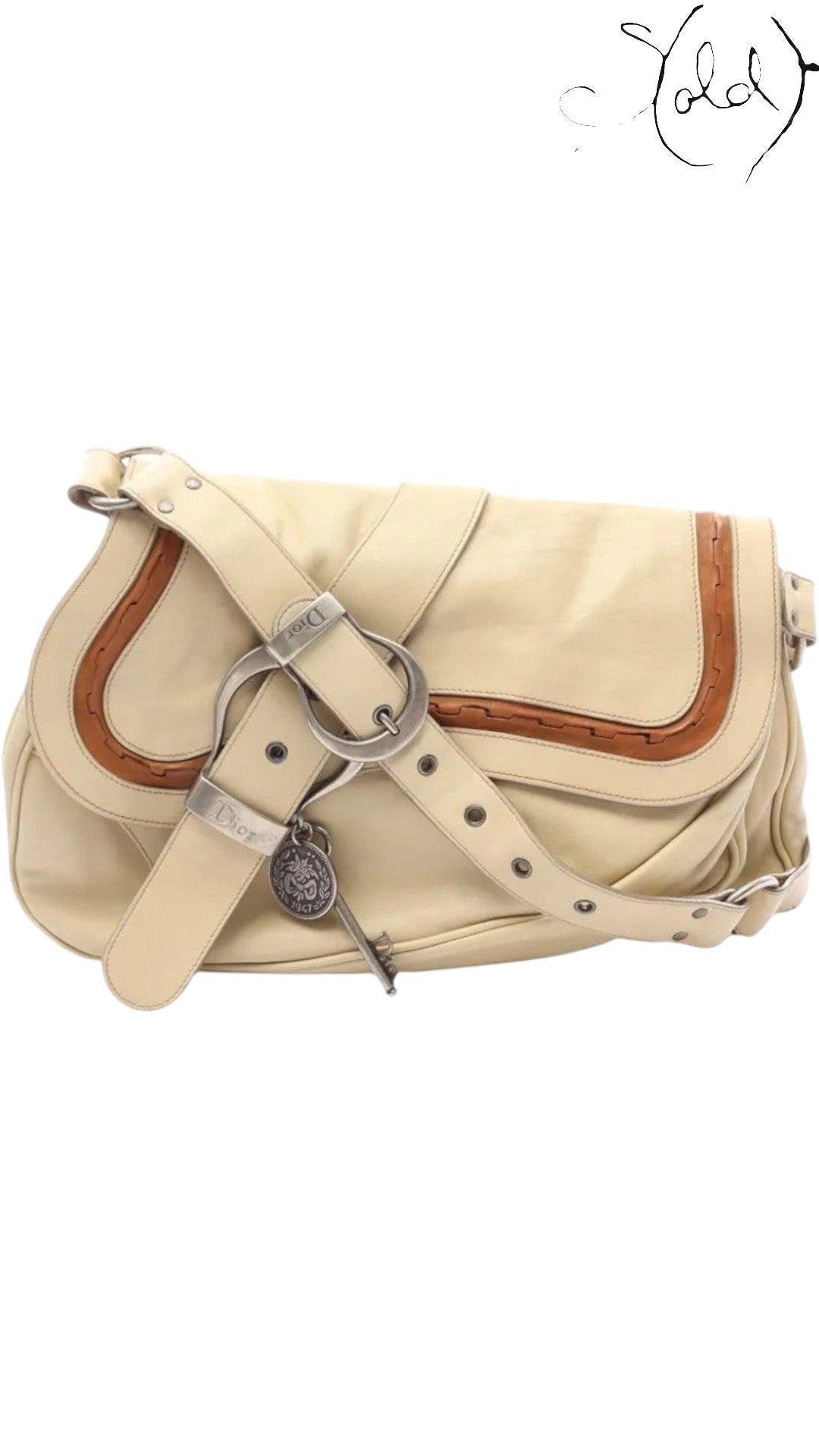
Also in the vault: pre-owned Dior 2000s Cannage shoulder bags, authenticated in Cairo.
What should authenticated vintage Louis Vuitton bags cost in Egypt?
Resale prices for authenticated Louis Vuitton vary by model, condition, era, and market. The table below shows realistic ranges across four currencies, what you would expect to pay for correctly authenticated pieces in good to excellent condition from a trusted source. These are not aspirational figures. They are what the market is doing right now.
| Piece | EGP | USD | EUR | GBP |
|---|---|---|---|---|
| Speedy 25. Monogram | 34,000-50,000 | $650-$950 | €600-€880 | £520-£760 |
| Speedy 30. Monogram | 43,000-65,000 | $820-$1,250 | €760-€1,150 | £660-£1,000 |
| Neverfull MM. Monogram | 42,000-65,000 | $800-$1,250 | €740-€1,150 | £640-£1,000 |
| Neverfull MM. Damier Ebene | 45,000-68,000 | $860-$1,300 | €790-€1,200 | £680-£1,040 |
| Alma PM. Epi Leather | 45,000-70,000 | $860-$1,340 | €790-€1,240 | £680-£1,070 |
| Pochette Metis. Monogram | 65,000-90,000 | $1,250-$1,720 | €1,150-€1,590 | £1,000-£1,380 |
| Keepall 45/50. Monogram | 55,000-90,000 | $1,050-$1,720 | €970-€1,590 | £840-£1,380 |
| Capucines PM. Taurillon | 150,000-220,000 | $2,870-$4,210 | €2,650-€3,890 | £2,300-£3,370 |
| Bum Bag. Monogram (RFID) | 130,000-195,000 | $2,490-$3,730 | €2,300-€3,450 | £2,000-£2,990 |
Prices reflect Q1 2026 market data. EGP ranges are Cairo market rates. USD, EUR, and GBP reflect global resale platforms (Vestiaire Collective, The RealReal, Fashionphile). Condition, era, and canvas type all shift the number. Rates approximate at EGP 52.3 / USD, EGP 56.6 / EUR, EGP 65.3 / GBP.
If you are being offered an authenticated vintage Louis Vuitton piece significantly below these ranges, in any currency, in any market, the authentication is likely the variable being cut. A real piece at the right price exists. A real piece at an impossible price generally does not.
For the full buyer protection standard, read the Sold Attire authenticity guarantee. Every qualifying piece is checked before listing and backed after purchase.
Recent Louis Vuitton references: compare Louis Vuitton Papillon 30 with pouch, Louis Vuitton Speedy 30 Damier Ebene 2019, and Louis Vuitton Speedy 30 Monogram circa 2000, then use the Louis Vuitton edit and LV date-code and microchip guide to match date-code, canvas and condition signals before sourcing.
Currently in the archive: the Toledo Blue Epi Speedy 30, authenticated and live at EGP 37,000. New pieces land weekly in this week's arrivals.
Frequently asked questions
How do I know if my Louis Vuitton bag is real?
Start with the date code, confirm that the format matches the era the bag is from (digits-only for early 1980s, month system for 1990-2006, week system for 2007-2021, NFC chip for post-2021). Check the heat stamp geometry (round O, close Ts, short L). Pick up the zipper pull: solid brass is cold and heavy. Count five stitches on the handle tabs. Check the Vachetta: if it is developing patina, it is real leather. If it has stayed pale or gone grey, it is not. Verify the canvas type matches its authentication tells, monogram alignment, Damier square precision, Epi grain direction. On any piece made after March 2021, look for the NFC chip rather than a physical code.
Do all Louis Vuitton bags have date codes?
Since March 2021, no. New bags carry an NFC microchip embedded in the lining in place of a physical stamp. Bags made between 1980 and 2021 have date codes, but the format changed three times: digits only in the 1980s, month and year format from 1990 to 2006, and week and year format from 2007 to 2021. If someone is selling you a "brand new 2024" bag with a physical date code, it is a counterfeit. Bags produced before 1980 may not have any date code at all, authentication for these pieces relies entirely on construction, materials, and hardware.
Where is the date code on a Louis Vuitton Neverfull?
On the Neverfull, the date code is on a small leather tab inside the interior pocket, near the seam where the pocket meets the lining. Pull the pocket fully open and look near the top edge. The stamp should be crisp, never blurry or faint. The detachable pochette that comes with the Neverfull has its own separate date code, which may differ from the main bag. Neverfulls made after March 2021 carry a microchip rather than a physical code.
What does SD mean on a Louis Vuitton bag?
SD is a factory code that can indicate France or the United States, depending on the year. Pre-1990s SD codes are French. Post-1990s SD codes are American (San Dimas, California). Always cross-reference the code with the "Made In" stamp. A bag stamped "Made in France" with a post-1990s SD code is a contradiction that does not resolve in the bag's favour. This is one of the most effective single checks in LV authentication, counterfeits almost always miss the SD transition.
How can I scan a Louis Vuitton microchip?
Any NFC reader app on a smartphone will detect the chip. The chip is embedded between the lining and canvas and is not visible. The authentication data it contains, purchase records, boutique, transaction ID, is accessible only through Louis Vuitton's own proprietary application. Detection confirms the chip's presence. Full verification requires the house's internal system. If you need professional authentication, whether you are in Cairo, Dubai, London, or anywhere else, contact us on WhatsApp.
What is Vachetta leather and why does it matter?
Vachetta is untreated cowhide, nothing between you and the leather. It starts pale cream and develops into honey-brown and deep caramel over years of use. The patina it develops is a record: of the oils from your skin, of the light it has spent time in, of how it has been stored. Replica trim does not do this. It either stays artificially pale or turns a flat grey. Leather that does not evolve is not Vachetta. Note: not all LV bags use Vachetta. Damier Ebene, Epi, and Empreinte lines use different leathers. Check the canvas guide above for what to expect on each type.
Where can I get a Louis Vuitton bag authenticated?
Sold Attire offers professional authentication. Our process covers hardware analysis, date code verification across all three eras, stitching inspection, canvas-specific checks, Vachetta assessment, and NFC chip detection on post-2021 pieces. Authentication certificates are available on request. We work with collectors and buyers globally, whether you are buying locally or internationally, the standard is the same. Message us on WhatsApp to arrange an assessment, or browse the authenticated Louis Vuitton collection directly.
How much is a pre-owned Louis Vuitton Speedy worth?
An authenticated Louis Vuitton Speedy 25 in Monogram canvas typically resells for $650-$950 USD (EGP 34,000-50,000) in good to excellent condition. The Speedy 30 commands $820-$1,250 USD (EGP 43,000-65,000). Pre-2000 production with well-developed Vachetta patina sits at the higher end. Condition, era, and provenance all shift the number. See our full pricing guide above for all major models across four currencies.
What is the difference between Monogram and Damier canvas?
Monogram canvas features the recognised LV interlocking initials, quatrefoil, and diamond motifs on a brown coated canvas, introduced in 1896. Damier Ebene is a brown-on-brown checkerboard pattern, first designed in 1888 and relaunched in 1996. The key authentication difference: Monogram pieces use Vachetta (untreated leather) trim that develops patina over time, while Damier Ebene uses coated brown leather trim that does not patina. Damier also demands exact square alignment at seams, even a millimetre of offset at a stitch line is a red flag. Both are coated canvas, not leather, despite common misconception.
Is Louis Vuitton a good investment?
Certain Louis Vuitton pieces have appreciated consistently over the past two decades, particularly vintage Monogram pieces from the 1980s and 1990s, limited collaborations (Murakami, Stephen Sprouse), and discontinued models. The Speedy 30 and Neverfull MM in Monogram canvas are among the most liquid assets in luxury resale, they sell quickly and hold value well. However, resale value depends heavily on condition, authentication, and provenance. A piece without credible authentication loses most of its secondary market value. The investment case for Louis Vuitton is real, but it starts with buying authenticated.
The Sold Attire Standard
- ✓ Every Louis Vuitton piece verified by in-house luxury specialists
- ✓ Multi-point authentication: hardware, stitching, Vachetta, canvas, date codes, and NFC
- ✓ Authentication certificate available on request
- ✓ Sourced from Japan's premier vintage market, where preservation is a cultural standard
- ✓ Next-day delivery across Cairo and Giza, nationwide available
- ✓ 14-day returns, no questions asked
Available Louis Vuitton pieces now
For readers checking details in person, the current Louis Vuitton edit gives you live pieces to compare against the same hardware, leather, stitching and condition standards discussed here. Current pieces include Louis Vuitton Joey Monogram Canvas Wallet, Louis Vuitton Speedy 30 Toledo Blue Epi Leather, and Louis Vuitton Damier Azur Hampstead MM CA0068, with the wider maison edit kept at the Louis Vuitton collection.
Current bag route: For authenticated Louis Vuitton bags in Egypt, browse authenticated Louis Vuitton bags in Egypt, then return to this guide for authentication, condition and provenance details.
Questions about a specific piece, or bringing something in for authentication?
For a specific Louis Vuitton hunt, submit a Source a Piece brief with the model, size, material, budget and deadline.
Message us on WhatsAppLouis Vuitton collection and sold archive references: the examples below span available and sold pieces. They document model, era, canvas, hardware and condition rather than a current stock list. Check the Louis Vuitton collection for current availability.
- Speedy and Keepall: Keepall Bandouliere 55 TH1926, Keepall Bandouliere 55 SP0969, Speedy 25 Damier Ebene, Speedy 25 Monogram (sold archive), Speedy 25 Monogram 2022, Speedy 30 Monogram 1992, Speedy 30 Monogram 1991, Speedy 30 Monogram 2011, Speedy 30 Monogram 2015, Speedy 30 Monogram circa 2000, Speedy 30 Damier Ebene 2019, Speedy 30 Toledo Blue Epi, and Murakami Multicolore Speedy 30 White 2003.
- Neverfull, Alma, and day bags: Neverfull MM Encre Idylle, Neverfull MM Monogram, Neverfull MM Damier Ebene 2010s (sold archive), Neverfull MM Damier Ebene 2008, Neverfull MM Azur Damier 2010, Stephen Sprouse Roses Neverfull MM (sold archive), Alma MM Noir Epi 1998, Saint-Placide Crossbody, Trouville 2004, and Melrose Amarante Patent.
- Pochette and clutch line: Mini Pochette Accessoires (sold archive), Pochette Accessoires, Pochette Accessoires CA0040, Pochette Accessoires VI1909, Pochette Accessoires AR1012 (sold archive), Pallas Clutch Blue Marine (sold archive), Pallas Clutch M41638, Pallas Clutch Employee Uniform 2018, Monogram Pallas Clutch, Papillon 30 Brown (sold archive), and Papillon 30 with pouch.
- Small leather goods and newer-chip pieces: Joey Monogram Wallet, Elise Wallet, Wallet on Chain Ivy 2024, Monogram Bum Bag with RFID, and Monogram Sonatine 2003.
- Other current Louis Vuitton: Marc Jacobs 2010 AW wool skirt. For the full runway-to-bag mix as it changes, keep the Louis Vuitton collection open beside this checklist.
For current authenticated bags beyond a single maison, browse the Carry Luxe edit or book a private viewing in New Cairo after you finish the checklist.







Leave a comment
This site is protected by hCaptcha and the hCaptcha Privacy Policy and Terms of Service apply.